JPMorgan Chase bank — America’s largest bank by total assets — shamed its low-income account holders in a recent tweet about financial responsibility.
On Monday afternoon, a short-lived tweet sent by Chase’s verified account was in the #MondayMotivation hashtag, and showed a hypothetical conversation between a poor account holder wondering why their balance was so low, and their bank account. The customer’s account blamed the customer’s poverty on frivolous purchases. The tweet was soon deleted and replaced with a promise from the bank that it would do better at #MondayMotivation tweets.
Senator Elizabeth Warren (D-Massachusetts), who is also running for the 2020 Democratic presidential nomination, mocked the bank’s tweet with one of her own, in which Chase wonders why customers aren’t saving money while customers tell them it’s because of stagnant wages, rising costs of living, and predatory behvior from the big banks.
.: why aren’t customers saving money?
Taxpayers: we lost our jobs/homes/savings but gave you a $25b bailout
Workers: employers don’t pay living wages
Economists: rising costs + stagnant wages = 0 savings
Chase: guess we’ll never know
Everyone: seriously?
— Elizabeth Warren (@SenWarren)
Chase bank lecturing customers about financial responsibility is particularly ironic, given that the financial institution received a $25 billion taxpayer bailout roughly a decade ago. There’s additional irony in that Chase bank CEO Jamie Dimon was unable to answer Rep. Katie Porter’s (D-California) questions during a recent House Financial Services Committee hearing when she asked him point-blank how a teller was supposed to make ends meet after painstakingly listing out financial obligations like housing, healthcare, food, and comparing that with the low salary Chase bank workers earn on average.
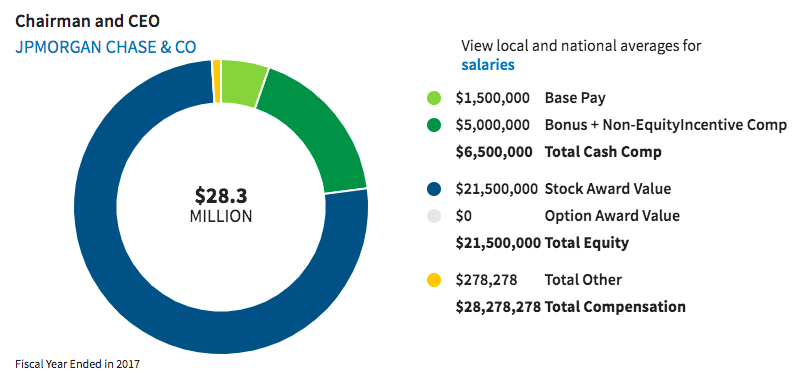
The bank paid Dimon more than $28 million for the fiscal year that ended in 2017, despite paying its bank tellers an average of just $13/hour. To compare, Chase rival Bank of America currently pays its tellers $15/hour, and recently announced it would .
Chase is also one of the big banks known for gouging its poorest account holders in overdraft fees, which are incurred when a customer’s account goes into a negative balance. Banks typically charge a daily overdraft fee, putting that customer further in the hole until he or she brings the balance back to zero, plus whatever the minimum required balance is for their account. In 2016, JPMorgan Chase, Bank of America, and Wells Fargo collectively took in more than $6.4 billion in overdraft fees — $300 million more in fees than in 2015.
Colin Grimaldi is a politics contributor for Grit Post. His work has previously been published in The Guardian, The Washington Post, The Houston Chronicle, Al-Jazeera America, and NPR, among others. Follow him on Twitter or send him an email at carl at gritpost dot com.
Join the Grit Post Mailing List! Get real news for the working class. Sign up today! Sponsored by: Grit Post