(EDITOR’S NOTE, 11/21/18, 2:08 PM ET: This article previously cited inflation-adjusted numbers that had been improperly adjusted twice by the author. We have corrected the error and replaced those numbers with new data showing how wages have not kept up with productivity.)
The fact that Congresswoman-elect Alexandria Ocasio-Cortez — who made less than $27,000 last year — has any savings at all is an achievement given the cost of living in New York City. But according to financial planners, Ocasio-Cortez is still financially irresponsible.
CNBC interviewed several financial planners for a recent story about the savings account of NY-14’s first-ever Latina representative in Congress, and they were flabbergasted that a 29-year-old who was working as a bartender until February of this year didn’t have at least $30,000 in the bank.
“Ocasio-Cortez’s level of savings isn’t bad but, based on her previous earnings, experts recommend she have between $8,750 and $30,000 put away for a crisis… Experts also recommend Ocasio-Cortez should have over $27,000 saved for retirement. That’s based on the logic that by the time you hit age 30, you should have a year’s worth of salary put away.”
CNBC cited data from Fidelity that showed in order to save up enough money to have a year’s salary put away, millennials should save up to 15 percent of each paycheck. Financial planners suggested the only reason this wasn’t happening was because millennials weren’t setting a monthly budget.
“Ideally, a 29-year-old would have at least a few thousand dollars in a cash reserve and the equivalent of a year’s salary in a retirement investment account,” Paul Fain, one of the financial planners CNBC quoted, said of Ocasio-Cortez.
The opinion of financial planners and “wealth management professionals” that millennials are irresponsible if they don’t have tens of thousands of dollars sitting untouched in a savings account is a pipe dream for millions of working-class Americans of all ages.
In August, the Urban Institute published a report finding that 40 percent of Americans make so little they frequently have to go without basic necessities, like food, shelter, and healthcare. This report came around the same time that 2018 second-quarter corporate profits . The Federal Reserve Board also discovered nearly half of Americans can’t even afford an unexpected $400 emergency expense without having to go into debt or sell some of their possessions.
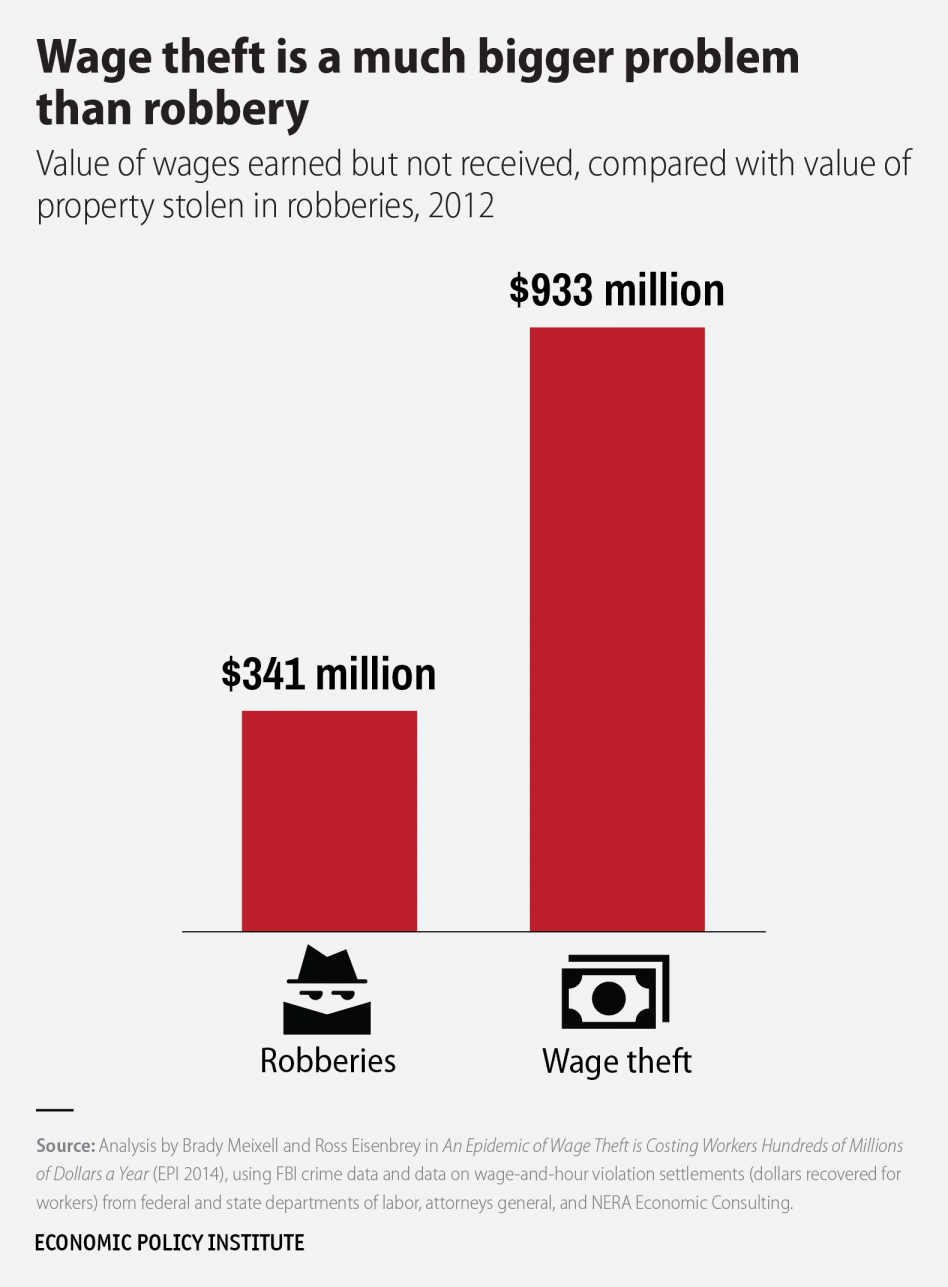
This isn’t because working-class Americans are financially irresponsible — by and large, most just aren’t being paid a living wage by their employers. And many are victims of wage theft, which far outpaces all other forms of theft in the U.S., according to FBI crime statistics. In 2012 alone, the value of wages earned by workers but never received amounted to $933 million, compared to just $341 million stolen in robberies that same year.
A 2011 graphic from former U.S. Labor Secretary Robert Reich for the New York Times illustrates exactly when wages stopped keeping up with productivity. Coincidentally, that time falls right around the onset of the anti-labor Reagan administration.
Less than a year into his presidency, Reagan fired nearly 12,000 air traffic controllers who were on strike, paving the way for union-busting measures across the U.S. and the subsequent squeezing of the American working class. Between 1979 and 2009, productivity grew by 80 percent, but average hourly compensation grew by just eight percent. This data paints a vastly different picture than the period between 1947 and 1979, when productivity grew by 119 percent and average hourly compensation grew by 100 percent.
Here's a chart that shows you exactly when income inequality became a feature instead of a bug.
— Tuxedo Mask (@TheLoveBel0w)
The squeeze is particularly harsh for millennials, many of whom were born near the end of the Reagan administration. By the time millennials entered the workforce, labor unions’ influence had been in decline for decades, and most young workers have been forced to make do with jobs that pay sub-par wages and offer no real benefits. Citing Bureau of Labor Statistics data, author Matthew Desmond wrote that had wages kept up with productivity, the minimum wage today , rather than $7.25.
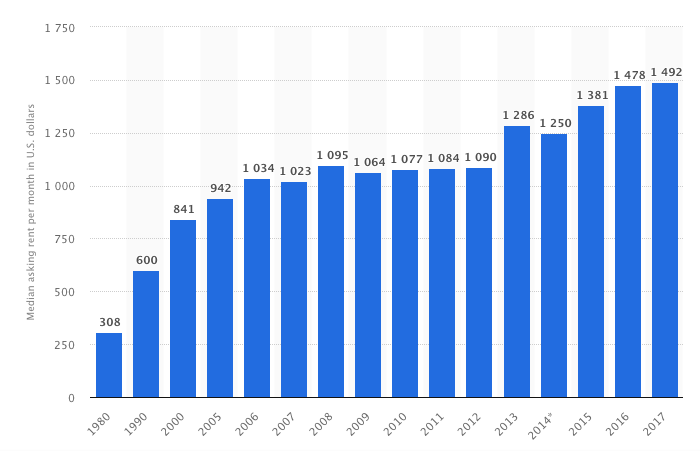
When accounting for both stagnant wages and rising costs of living, saving anything is a monumental task. Rent costs alone have skyrocketed over the last several decades and show no signs of slowing down. Data from Statista shows that the monthly median rent for an unfurnished apartment in the U.S. in 1980 was $308/month ($981 in today’s dollars). But in 2017, that figure is just shy of $1,500/month — roughly $500 more than it should be.
And for millennials who have children to provide for, the cost of living goes up way more. Child care costs for both in-home and in-center child care have climbed to for parents who need someone to look after their children while they’re at work — almost as much as the median rent of $1,500/month. For single parents, child care can eat up of annual take-home pay. To put these numbers in the proper context, the U.S. Department of Health and Human Services says that child care shouldn’t cost more than seven percent of a parent’s income.
Millennials who are Ocasio-Cortez’s age also have to contend with crippling student debt. For most millennials, having a college degree is necessary to be competitive in the job market, and any millennial who isn’t independently wealthy has no choice but to take out loans to pay for tuition. CNBC estimated the average student borrower will owe more than $37,000 when they graduate.
Credible’s student debt calculator finds that the average monthly student loan payment — assuming a 6.8 percent interest rate over a 120-month loan term — would be $575. When faced with low wages, high costs of living, and sky-high child care costs for parents, it’s no wonder that nearly 40 percent of student borrowers are expected to default on their debt within the next five years.
Simply put, financial planners (at least those quoted by CNBC) fail at having even the most basic understanding of the reality of working-class millennials like Alexandria Ocasio-Cortez, and the voters who put her in office.